
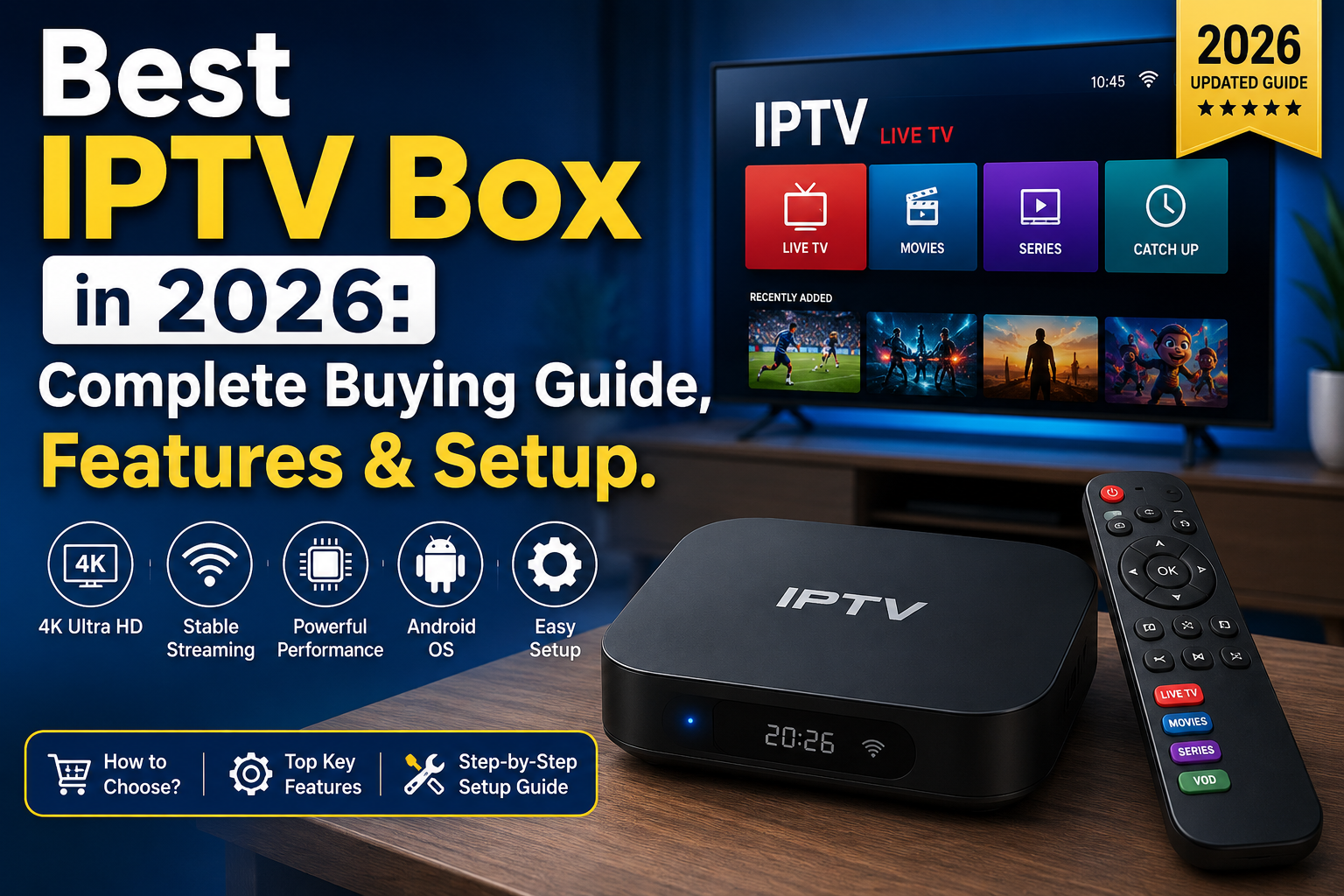
If you’ve ever stared at a sky-high cable bill and wondered why you’re paying over a hundred bucks a month just to watch iptv box three channels, you are definitely not alone. A few years back, I hit my breaking point with traditional cable. Between hidden equipment rental fees, regional sports surcharges, and endless contracts, cutting the cord became less of a luxury and more of a survival tactic for my monthly budget.
That search for a better way to watch TV led me straight down the rabbit hole of streaming hardware. Specifically, I wanted to figure out if buying a dedicated iptv box was actually worth the hype, or if it was just another tech gadget destined to gather dust behind my entertainment center.
After testing dozens of devices, tweaking network settings, and dealing with my fair share of annoying buffering wheels, I’ve learned exactly what works, what doesn’t, and what you need to know before spending a single dollar. Whether you want to stream live sports, catch up on international programming, or simply clean up your living room setup, finding the right iptv box can completely transform how you watch television.
In this comprehensive guide, we are going to strip away the technical jargon and walk through everything you need to know to get a flawless, high-definition streaming experience at home.
What Is an IPTV Box and How Does It Actually Work?
At its most basic level, an iptv box (Internet Protocol Television box) is a small hardware device that acts as a translator between your television and your high-speed internet connection. Instead of receiving video signals through a traditional satellite dish, terrestrial antenna, or coax cable line, the device pulls video streams directly over the internet using standard IP protocol packets.
When you press play on a show or tune into a channel, the device sends a request to a remote server. The server decodes the video data into digital packets, sends them over your broadband network, and your hardware decodes those packets back into a clean video signal displayed on your TV screen in real time.
+------------------+      Internet       +-------------------+      HDMI       +-------------------+
| Remote IP Server |  -------------->   |     IPTV Box      |  ------------>  |  Television / Display |
| (Video Stream)   |  (Data Packets)     | (Decodes Signal)  |  (AV Signal)    |   (Your Screen)   |
+------------------+                     +-------------------+                 +-------------------+
Traditional Cable vs. IPTV Streaming
To appreciate why this technology has exploded in popularity, it helps to look at how it differs from old-school cable broadcasting.
| Feature | Traditional Cable TV | Modern IPTV Box Setup |
| Delivery Method | Dedicated coax/fiber infrastructure | Existing broadband internet connection |
| Equipment | Proprietary provider set-top box | Flexible hardware options (Android, Linux, Apple) |
| Location | Tied strictly to your living room outlet | Portable; works anywhere with strong internet |
| Channel Customization | Rigid, expensive channel bundles | High flexibility via customizable apps |
| Hardware Ownership | Ongoing monthly rental fees | One-time hardware purchase |
Why Dedicated Hardware Outperforms Built-in Smart TV Apps
A lot of folks ask me: “Why should I spend extra money on a standalone device when my Smart TV already has apps built in?”
It’s a fair question. On paper, your brand-new 4K Smart TV looks like it can handle everything out of the box. But in real-world everyday use, relying solely on your TV’s native operating system often leads to frustrating performance bottlenecks.
1. Superior Processing Power and RAM
Smart TV manufacturers focus the vast majority of their budget on the display panel—the OLED layer, backlighting, and color accuracy. The internal processor and memory are usually bare-minimum components designed just to run basic menus. A dedicated set-top streaming device, on the other hand, puts its entire budget into processing power, dedicated graphics chips, and RAM. This means snappier menu navigation, faster app launch times, and zero lagging when switching channels.
2. Specialized Codec and Hardware Decoding
High-quality video streams use advanced compression standards like H.265 (HEVC) or AV1 to deliver crisp 4K picture quality without consuming massive amounts of bandwidth. Cheap smart TV chips struggle to decode these complex video streams natively, causing frame drops or stutters. A purpose-built device features dedicated hardware decoders that process heavy video files effortlessly.
3. Frequent Software Updates and Longevity
TV manufacturers are notoriously slow at pushing software updates to older TV models. After two or three years, your Smart TV’s app store might stop supporting new updates altogether. Standalone streaming hardware gets regular system updates for many years, keeping your system secure and compatible with the latest streaming standards.
Key Features to Look For When Buying an IPTV Box
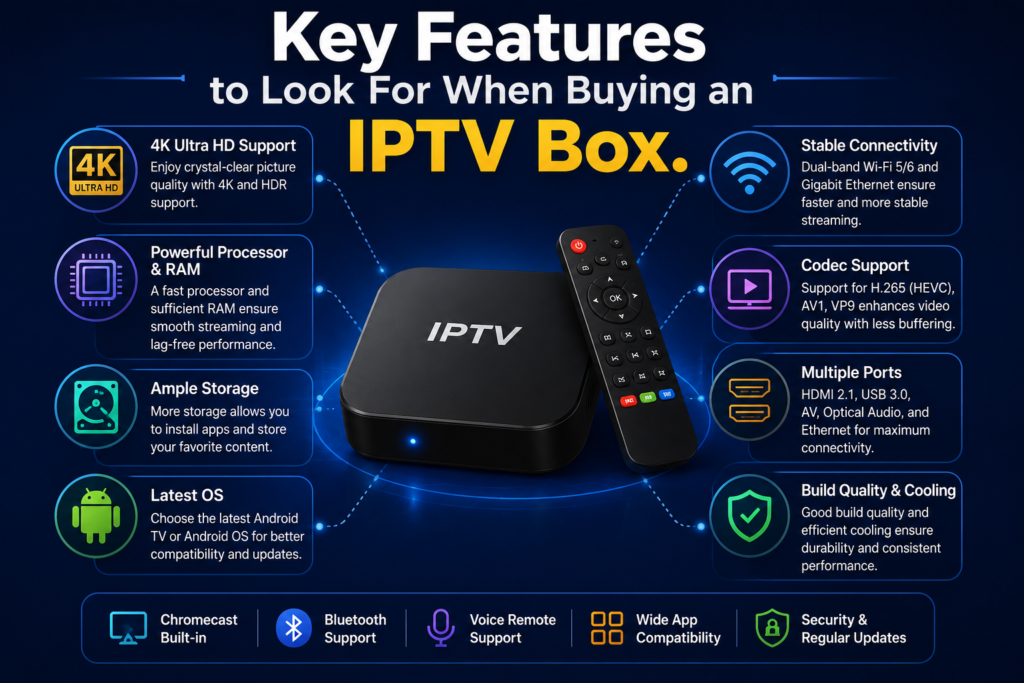
If you go onto online marketplaces, you will find hundreds of generic streaming boxes claiming to offer “10K resolution” and “lightning speed” for twenty bucks. Do not fall for the marketing traps! Here are the vital technical specs you must evaluate before making a purchase.
Processor (CPU/GPU) Architecture
The processor is the engine of your device. Look for modern quad-core or octa-core ARM processors (such as recent Amlogic or Realtek chipsets) or Apple’s silicon chips. A robust CPU ensures your device can handle high-bitrate video playback without overheating or choking during action-heavy live broadcasts.
Memory (RAM) and Internal Storage
Never buy a streaming device with less than 2GB of RAM in 2026 if you want a smooth experience.
- 2GB RAM: Bare minimum for fluid HD navigation.
- 4GB RAM or higher: Recommended for heavy multi-tasking, 4K streaming, and rapid channel flipping.
- Storage: Aim for at least 16GB or 32GB of onboard storage so you have plenty of room to install apps, cache video data, and keep system files running smoothly.
Gigabit Ethernet vs. Wi-Fi Capabilities
Wi-Fi is convenient, but wired ethernet is the undisputed king of stable streaming. Live video broadcasts are intolerant of packet loss. While a brief drop in speed during a movie download just delays the download by a second, a speed drop during a live broadcast results in a frozen screen or a buffering circle right before a crucial game-winning play.
Ensure your device features a physical Gigabit Ethernet port (1000 Mbps) or at least high-end Wi-Fi 6 / 6E support if plugging in a network cable directly isn’t physically possible in your living room layout.
       +-----------------------------------------------------------+
       |                  CRITICAL HARDWARE CHECKLIST             |
       +-----------------------------------------------------------+
       | [x] CPU/GPU: Amlogic / Realtek / Apple Silicon            |
       | [x] Memory: Minimum 2GB RAM (4GB+ preferred for 4K)       |
       | [x] Storage: 16GB+ internal storage                       |
       | [x] Networking: Gigabit Ethernet port & Wi-Fi 6           |
       | [x] Video Output: HDMI 2.1 supporting 4K @ 60fps / HDR10+ |
       +-----------------------------------------------------------+
Android TV vs. Linux Formats: Which Operating System Wins?
When shopping for hardware, you will primarily encounter two operating system categories: Android-based devices and dedicated Linux-based set-top boxes. Choosing between them comes down to how you plan to use your media setup.
                         +-----------------------------+
                         |   Choose Your Operating System   |
                         +-----------------------------+
                                        |
                   +--------------------+--------------------+
                   |                                         |
                   v                                         v
     +---------------------------+             +---------------------------+
     |      ANDROID TV / OS      |             |     LINUX / STB FORMAT    |
     +---------------------------+             +---------------------------+
     | * Huge app ecosystem      |             | * Singular focus on live  |
     | * Universal flexibility   |             |   channel delivery        |
     | * Google Assistant / Voice|             | * Lightning fast boot time|
     | * Great for multi-use     |             | * Ultra-simple remote use |
     +---------------------------+             +---------------------------+
Android TV OS (Flexible All-Rounder)
Android TV (or Google TV) powers popular devices like the Nvidia Shield, Chromecast, and various certified streaming boxes.
- Pros: Unmatched versatility. You get full access to the official Google Play Store, meaning you can install standard streaming apps, web browsers, media player applications, and games all on one single device.
- Cons: Takes a little bit of initial setup and navigation configuration to customize menus for quick channel access.
Dedicated Linux-Based Boxes (Purpose-Built Live TV)
Linux-based set-top boxes (often manufactured by brands like Formuler or MAG) are designed for one specific job: delivering a traditional cable-like TV experience over internet protocols.
- Pros: Blazing fast boot times, zero bloatware, and specialized remote controls with direct numerical keypads, guide buttons, and recording controls. They launch straight into your electronic program guide (EPG) the second you power them on.
- Cons: Limited app flexibility. You generally cannot download standard third-party apps or play complex games on these devices.
Step-by-Step Guide: How to Set Up Your Hardware
Setting up your new device properly from day one will save you hours of troubleshooting later. Follow this simple step-by-step walk-through to get your system configured for maximum performance.
1.Physical Installation and Power Connection:Avoid cheap HDMI cables and crowded power strips.
Connect your device directly to your television’s primary HDMI port using a High-Speed HDMI 2.0 or HDMI 2.1 cable capable of transmitting 4K resolution at 60Hz. Plug the power adapter into a surge protector rather than directly into an overloaded wall outlet to protect the internal circuitry from power spikes.
2.Establish a Stable Network Connection:Prioritize wired Ethernet over wireless connections.
For the absolute best performance, run a CAT6 Ethernet cable from your home router directly into the device’s network port. If you must use Wi-Fi, ensure the device is connected to your router’s 5GHz or 6GHz band rather than the congested 2.4GHz band.
3.Configure System Resolution and Display Settings:Match output settings to your TV panel specs.
Power on your device and navigate to System Settings > Display. Set the display output resolution to match your TV’s native capability (e.g., 3840x2160p at 60Hz). Enable Match Frame Rate options if available to prevent screen tearing during fast-moving sports action.
4.Install Your Preferred IPTV App or Client:Download verified software from official stores.
If using an Android device, open the Google Play Store and download a reputable media player software designed for playlist management (such as Tivimate, IPTV Smarters, or Perfect Player). If using a dedicated Linux device, launch the built-in portal software.
5.Input Playlist Information and Load EPG:Configure M3U link or Xtream Codes API credentials.
Open your chosen software and input your playlist URL (M3U format) or Xtream Codes login credentials provided by your service. Ensure you also map the Electronic Program Guide (EPG) source link so your channel menu populates with full show descriptions, times, and channel logos.
Network Requirements and Speed Optimizations for Smooth Playback
Nothing ruins movie night faster than constant buffering or sudden audio sync dropouts. Most playback issues are caused by home network congestion or internet service provider throttling rather than faulty hardware.
How Much Speed Do You Actually Need?
Here is a realistic breakdown of the connection speeds required per device streaming in your household:
- Standard Definition (SD): 5 Mbps stable download speed
- High Definition (1080p HD): 15–20 Mbps stable download speed
- 4K Ultra HD (HDR/60fps): 50+ Mbps stable download speed
Keep in mind that these numbers apply per device. If someone else in your household is downloading large gaming updates or video chatting while you try to watch a live match in 4K, your total home bandwidth needs to handle both activities simultaneously.
+-------------------------------------------------------------------+
|               MINIMUM STABLE BANDWIDTH REQUIREMENTS               |
+-------------------------------------------------------------------+
|  [SD 480p]    ==> 5 Mbps                                          |
|  [HD 1080p]   ==============> 15 - 20 Mbps                        |
|  [4K UHD]     ========================================> 50+ Mbps  |
+-------------------------------------------------------------------+
Essential Tweaks for Zero Buffering
If your internet speed test shows plenty of bandwidth but your stream still stutters, try applying these proven optimizations:
- Use Custom DNS Servers: Default ISP domain name servers are often slow and clogged. Change your router’s primary and secondary DNS settings to Cloudflare (
1.1.1.1and1.0.0.1) or Google (8.8.8.8and8.8.4.4) to speed up server lookup queries. - Enable Quality of Service (QoS) on Your Router: Open your home router’s admin panel and turn on QoS. Assign high priority to your streaming hardware’s IP address so your gaming PCs or smart home devices don’t steal bandwidth during live streams.
- Adjust App Buffer Size: Inside your media player app settings, locate the buffer size controls. Increasing the buffer pre-load from 2 seconds to 5 or 10 seconds creates a larger cushion against temporary home network speed dips.
Essential Accessories to Upgrade Your Setup
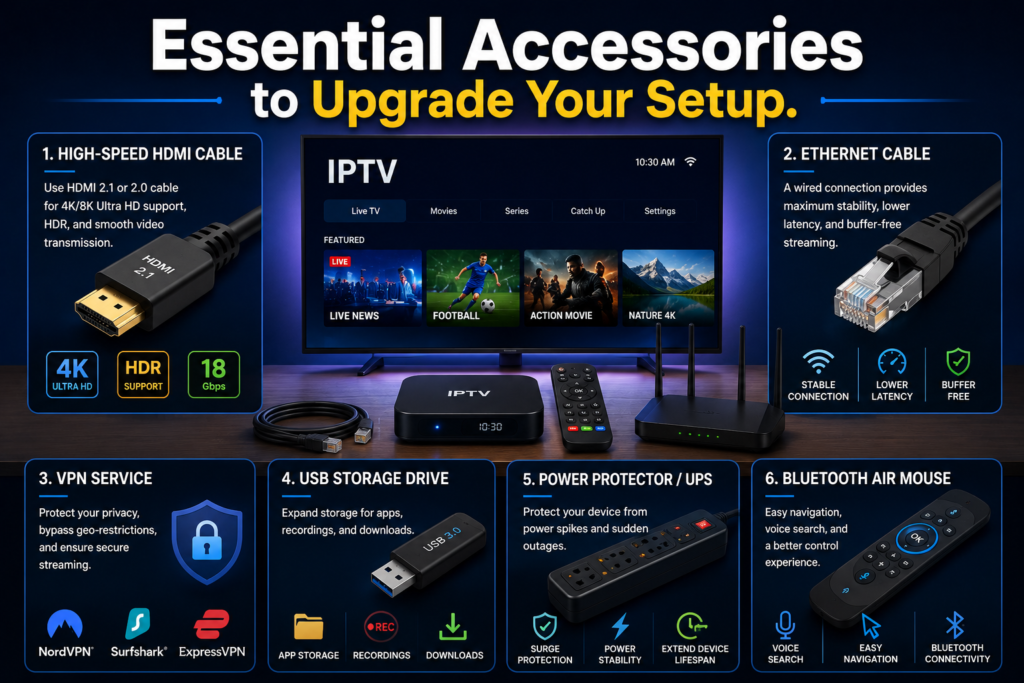
While a solid set-top device is the heart of your home theater, adding a few inexpensive accessories can turn a decent setup into an absolute joy to use every single day.
       +-----------------------------------------------------------+
       |             RECOMMENDED HARDWARE ACCESSORIES              |
       +-----------------------------------------------------------+
       |  1. Backlit Air Mouse Remote with Full QWERTY Keyboard    |
       |  2. High-Speed USB 3.0 External Storage Drive (for PVR)   |
       |  3. Ethernet Powerline Adapters (if router is far away)   |
       |  4. Low-Profile Thermal Cooling Pad (prevents throttling) |
       +-----------------------------------------------------------+
1. Air Mouse with QWERTY Keyboard
Standard factory remotes can make typing long search queries or entering complex URLs an absolute nightmare. A universal Bluetooth or 2.4GHz wireless air mouse features a built-in gyroscope that lets you point and click on screen like a magic wand, along with a full QWERTY keyboard on the back.
2. High-Speed External Storage Drive
If you plan to use digital video recorder (PVR) features to pause, rewind, or schedule recordings of live television broadcasts, internal memory will fill up almost instantly. Plug a fast USB 3.0 flash drive or external Solid State Drive (SSD) into your device to store hours of high-definition recordings without slowing down the operating system.
Troubleshooting Common Issues
Even with high-end hardware, software glitches happen. Here is a quick reference guide to solving the most frustrating issues without panicking.
Issue 1: Audio and Video Are Out of Sync
- Cause: Frame rate mismatches between the source file, the player software, and your TV’s refresh rate.
- Fix: Go into your media player settings and toggle “Match Frame Rate” or adjust the manual audio delay setting (+/- milliseconds) until dialogue perfectly aligns with lip movements.
Issue 2: Screen Goes Black or Flickers Periodically
- Cause: HDMI handshake failure or insufficient cable bandwidth.
- Fix: Swap out your HDMI cable for a certified High-Speed HDMI cable. Make sure the cable is fully seated in the port, and disable HDMI-CEC settings temporarily to test for device conflicts.
Issue 3: Stream Buffers Every Few Minutes at the Same Time Daily
- Cause: Local network congestion or ISP speed throttling during peak evening hours (usually 7 PM – 11 PM).
- Fix: Restart your home modem and router to clear cached tables. Test your speed on a secondary device, and switch from Wi-Fi to a direct wired ethernet cable connection.
Frequently Asked Questions
What is the primary function of an iptv box?
An iptv box decodes internet protocol video streams and transforms them into an audio/video signal that displays on your television via an HDMI connection.
Can I use an iptv box on any television?
Yes! As long as your television has a standard HDMI port, you can plug in and use a modern streaming box. Even older flat-screen TVs without built-in smart functionality will work perfectly.
Do I need a high-speed internet connection for an iptv box?
Yes, a stable internet connection is essential. You need a minimum download speed of 15 Mbps for clear HD content and 50 Mbps or higher if you plan on streaming live content in 4K resolution.
Why is my iptv box buffering when my speed test shows fast internet?
Speed test results show peak speed, not stability. Buffering usually occurs due to Wi-Fi signal drops, overcrowded local DNS servers, improper buffer settings in your media player app, or ISP network management during peak traffic hours.
What is the difference between an Android TV box and a Linux iptv box?
An Android TV device gives you access to a massive library of downloadable apps via the Google Play Store, making it an all-in-one entertainment hub. A Linux-based set-top box focuses almost exclusively on delivering a traditional, fast, cable-style live TV guide interface with minimal setup.
How do I connect my iptv box if my router is in another room?
If running a direct Ethernet cable isn’t practical, you can use a Wi-Fi 6 wireless connection on the 5GHz band, or use a pair of Powerline Ethernet adapters, which send network data through your home’s existing electrical wiring.
Final Thoughts: Finding the Right Setup for Your Home
Investing in a quality iptv box is easily one of the most practical upgrades you can make to your home entertainment system. By taking control of your hardware, eliminating monthly box rental fees, and bypassing sluggish smart TV menus, you unlock a fast, crisp, and completely customized viewing experience tailored precisely to your preferences.
Remember: hardware matters! Don’t ruin your cord-cutting experience by opting for ultra-cheap, unbranded junk boxes with inadequate cooling and underpowered processors. Stick to reputable devices with robust processors, plenty of RAM, and solid network connectivity.
Pair your hardware with a reliable home network setup, optimize your display settings, and you’ll be set up to enjoy seamless streaming, crisp live sports, and endless entertainment right from the comfort of your couch.


3 Responses
[…] works identically across iPhones, iPads, Android smartphones, Windows PCs, MacBooks, and Smart TVs, IPTV Smarters Pro is the go-to […]
[…] content libraries, and compatibility with devices they already own, like Amazon Firesticks, Android TVs, Apple TVs, and […]
[…] you load a public IPTV playlist into a compatible app like VLC, TiviMate, or IPTV Smarters, the player reads this plain text file. It parses the metadata—such as the channel name, […]